
Road noteAbout 65 km north of Jodhpur, roughly an hour and a half by car on a fair road. Shoes off at the temples; leather may be refused at the Jain temple.
Osian is a small desert town about sixty-five kilometres north of Jodhpur, and on the way in it looks like any other: low houses, a market street, goats in the shade of walls. Then the temples begin to appear, some on open ground, some among the houses, one climbing a hill at the far end of town. They are among the oldest standing temples in Rajasthan, and for anyone interested in how Indian temple building developed, they are worth the drive many times over.
A town on the caravan road
Osian prospered because of where it stood. It lay on the old caravan routes across the Thar, the roads that carried goods between the Gangetic plain, Gujarat and the lands to the west, and merchants passing through had wealth to spend on their gods. Between roughly the eighth and the eleventh centuries, in the time of the Pratihara rulers who held much of western India, the town filled with temples, both Hindu and Jain.
Many of those temples survive in some form, and around a dozen or more are clustered in and around the town. The merchant connection lasted. The Oswal community of Jain traders takes its name from Osian, and many Oswal families still come here to visit the temples their ancestors knew. Later the town shrank, the routes shifted and the desert crept closer, which is one reason so much of the early building was left alone.
The Sachiya Mata temple
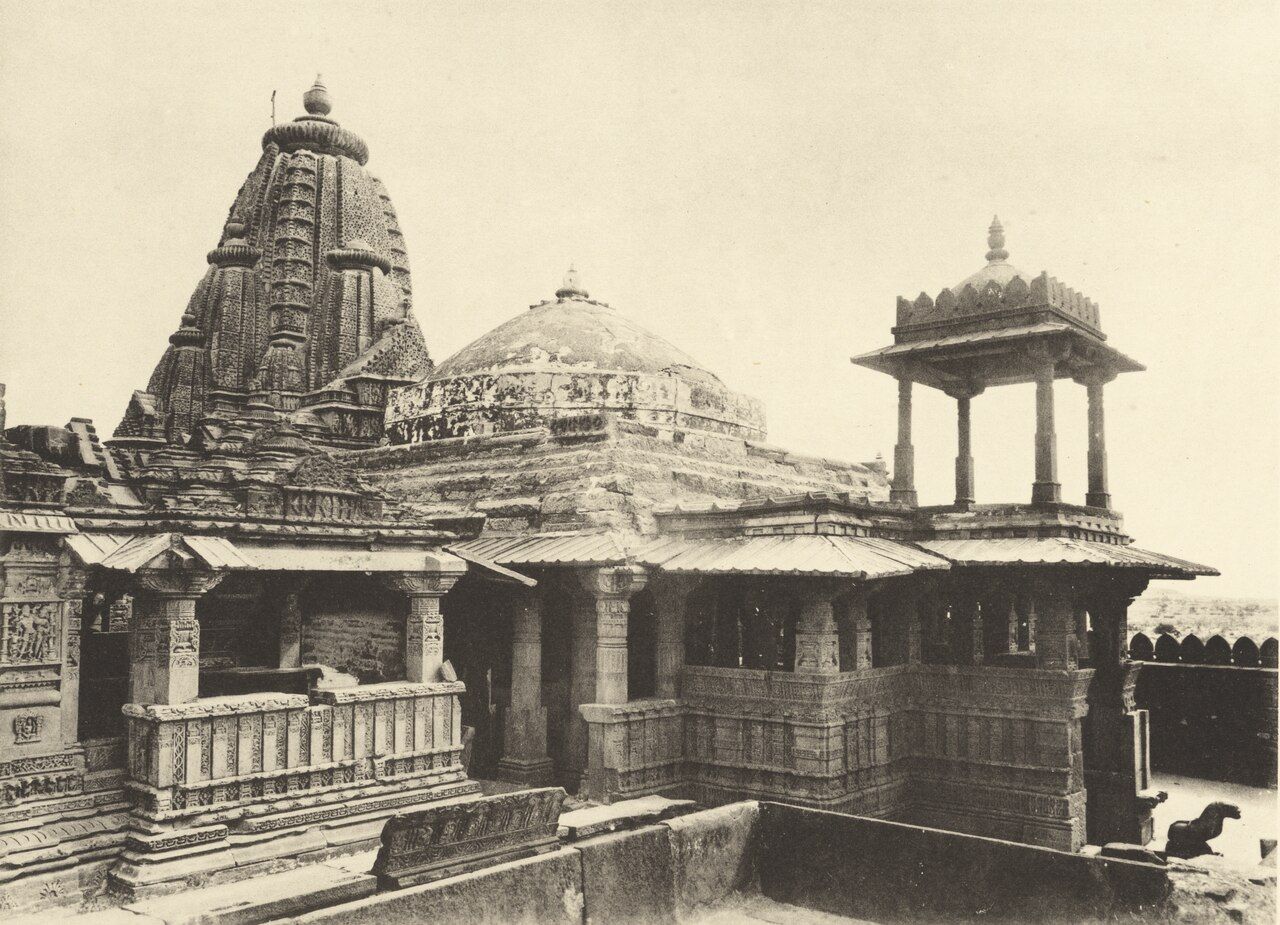
The largest and busiest temple sits on a hill at the edge of town and is dedicated to Sachiya Mata, a form of the goddess. Unlike most of the old temples here, it is very much alive. Pilgrims climb the stepped approach through a series of arched gateways, bells ring, and on festival days the hill is crowded. The temple has been added to over the centuries, so older carved stone sits beside later shrines, domes and pavilions.
As at any temple in worship, shoes come off at the foot of the steps, and shoulders and knees should be covered. Climb slowly in the heat. From the top you look out over the town, the scattered temples below and the flat, pale land running off towards the dunes. It is a good place to get your bearings before you go looking for the older shrines.
The Mahavira temple
The other great temple of Osian is Jain, dedicated to Mahavira, the last of the twenty-four Jain tirthankaras. It is one of the oldest Jain temples in western India still in use, though, like Sachiya Mata, it has been rebuilt and extended over time. The approach leads through a carved gateway and an ornate torana, an arch of stone, into a courtyard with the main shrine at its heart.
Jain temples have their own rules for visitors. Leather items such as belts, bags and wallets are usually not allowed inside, and you may be asked to leave them at the gate. Hours for non-worshippers can be restricted, and photography may be limited in parts of the temple, so ask before you take pictures. Inside, look up: the ceilings and the brackets are carved with the same patience you will see at much larger Jain temples, like the marble halls of Ranakpur far to the south.
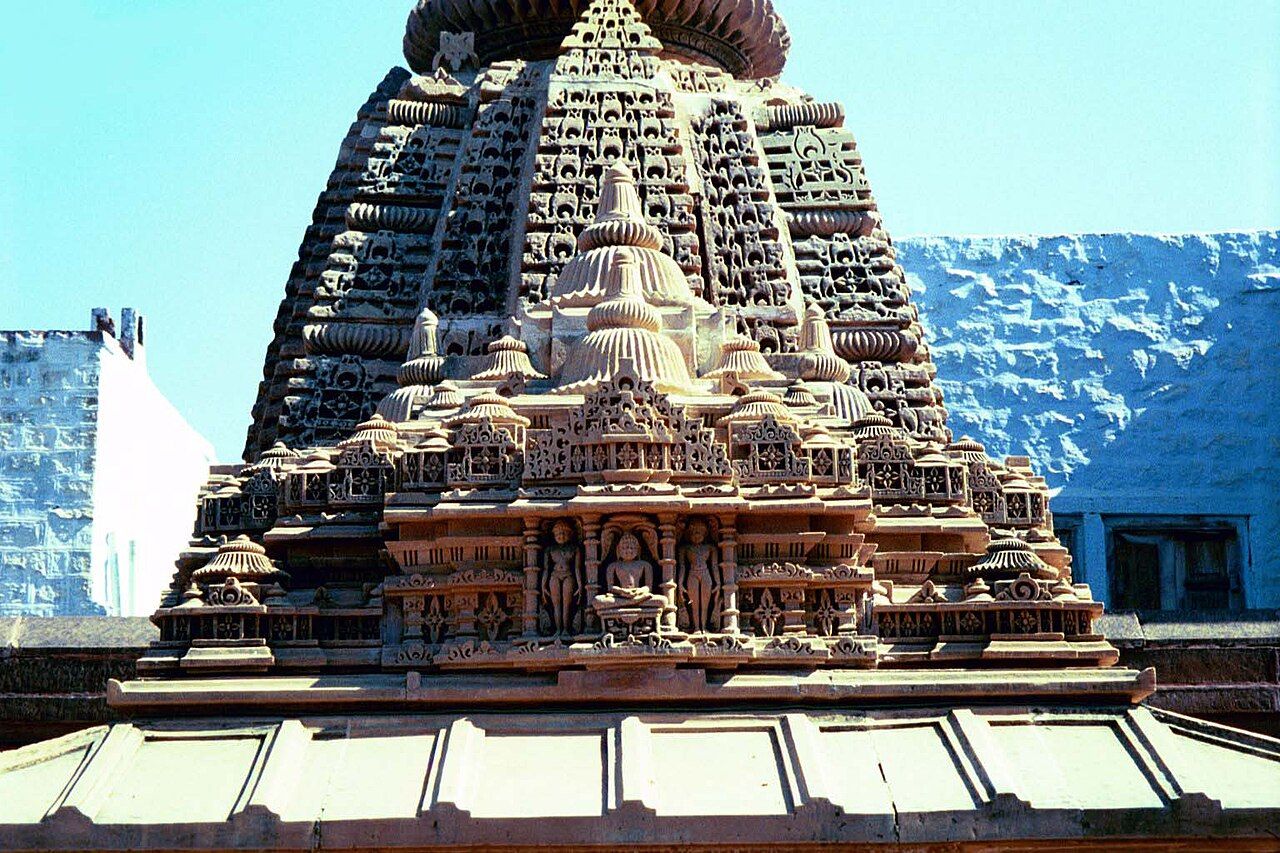
On the roofline, the spire is built up from smaller copies of itself, a common device in temples of this region. Each little tower repeats the shape of the whole, so the stone seems to climb in layers. Seen against a hard blue desert sky, the effect is striking.
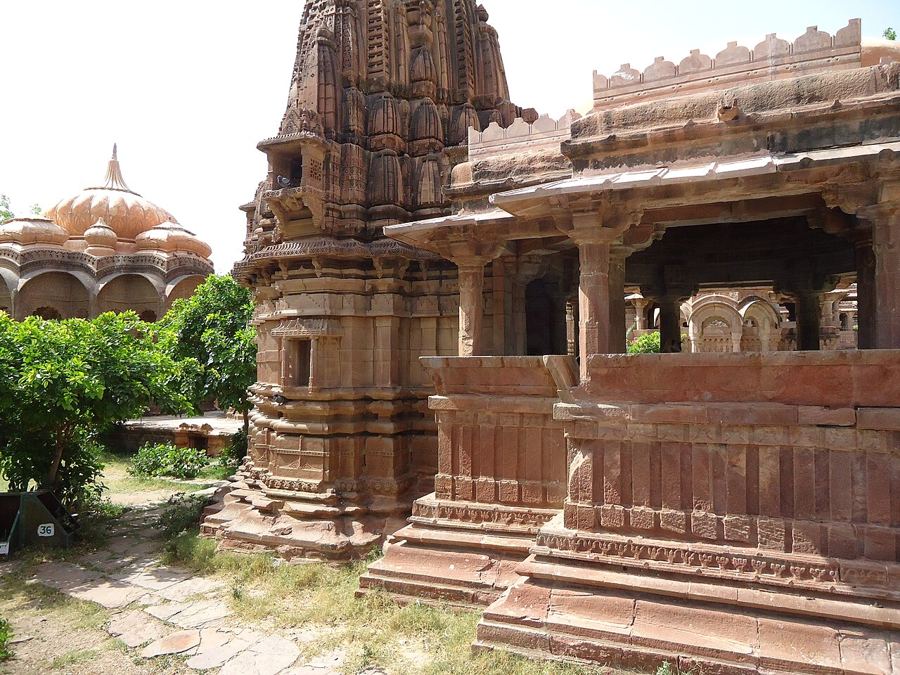 Worth the detour · MandoreMandore's red sandstone cenotaphs
Harihara and the older shrines
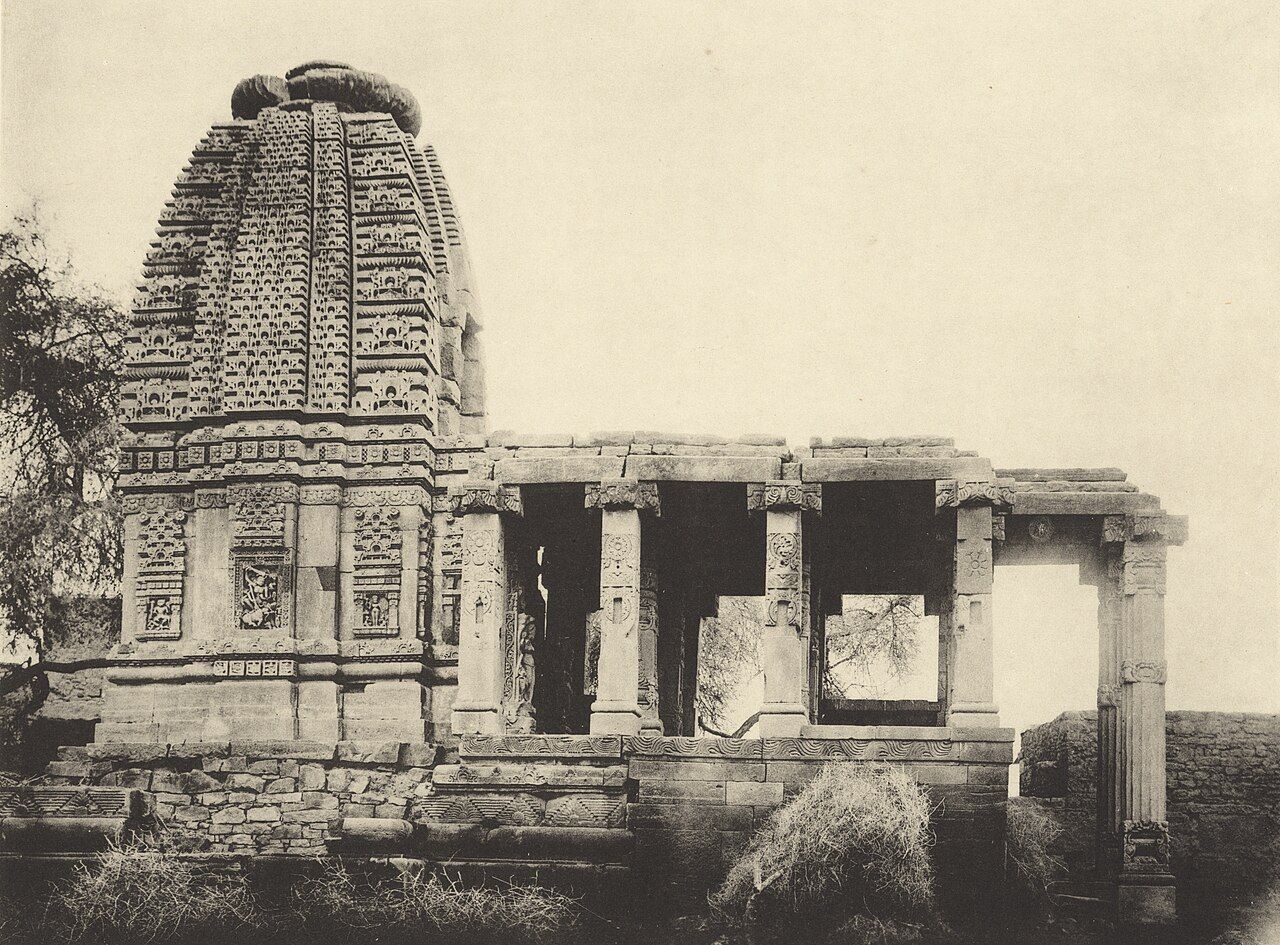
Spread around the town are smaller and older temples, some in worship, some kept as monuments. Among them are the Harihara temples, dedicated to a combined form of Vishnu and Shiva, a reminder that the people who built here did not always draw sharp lines between their gods. There are also temples associated with Surya and with other deities, some with their spires intact and some reduced to platforms and carved walls.
These earlier shrines are often quieter than the two big temples, and for many visitors they are the best part of Osian. Their walls carry carved panels of gods, river goddesses at the doorways, musicians, dancers and scrolling vines, worn soft by more than a thousand years of desert wind. Walk round them slowly and look at the base mouldings and the door frames, where the finest work tends to be.
Old photographs from the late nineteenth century show some of these temples half buried in sand and scrub. They have since been cleared and repaired, but the sense that they have survived a long neglect has not entirely left them.
The dunes beyond town
Osian sits close to sand dunes, and in the late afternoon many visitors walk or ride out to see the light go gold across them. Camel rides are commonly offered around the dunes. Agree any arrangement clearly in advance, and remember that the dunes here are modest compared with the deep desert further west; their appeal is the quiet and the colour rather than the scale.
If you are short of time, skip the dunes and give the hours to the temples instead. If you have the afternoon, though, the contrast is worth having: carved stone in the morning, open sand in the evening, and the town between them.
Osian as a detour from Jodhpur
Most people visit Osian as a half-day or day trip from Jodhpur, driving out in the morning and back by evening. A car with a driver is the simplest way to do it; there are also buses and trains. Our notes on getting around Rajasthan by road and rail cover the choices. Pair it with a stop on the way at the old capital of Mandore, which lies just north of Jodhpur on the same side of the city.
The best months are roughly November to February, when the days are warm and the nights cool. In summer the heat is severe and the stone floors burn; in the monsoon the roads can be slow. If you are coming from the north, Osian also fits on the road between Bikaner and Jodhpur, so you can see it after the Karni Mata temple at Deshnoke and arrive in Jodhpur by dark.
Next in Desert towns: Mandore's red sandstone cenotaphs