
Road noteAbout 9 km north of central Jodhpur, roughly half an hour by car or auto-rickshaw depending on traffic. Parking near the garden gate. Some shrines ask for shoes off.
Most people who come to Jodhpur spend their time looking up at the great fort on its rock. Fewer make the short drive north to Mandore, and that is a pity, because it explains a good deal about the city. This was the capital of Marwar before Jodhpur existed. When Rao Jodha moved his seat to the new fort on the hill in 1459, Mandore was not abandoned. It became the place where the ruling family remembered its dead, and its gardens are still full of their memorials.
The old capital of Marwar
Mandore is old. Long before the Rathores, it was a seat of earlier dynasties, and remains of an old fort lie on the higher ground above the gardens. By the fifteenth century it had become the capital of the Rathore rulers of Marwar. It was low and hard to defend, though, and Rao Jodha chose a better position: the steep rock where Mehrangarh now stands, about nine kilometres to the south. The new city that grew below the fort took his name.
Mandore remained close to the family. In the centuries after the move, the rulers of Jodhpur built cenotaphs here for their predecessors, and the old capital turned slowly into a garden of memory. Today it is a public park, busy with local families at weekends, and the town around it has been swallowed by the outskirts of Jodhpur.
Cenotaphs built like temples
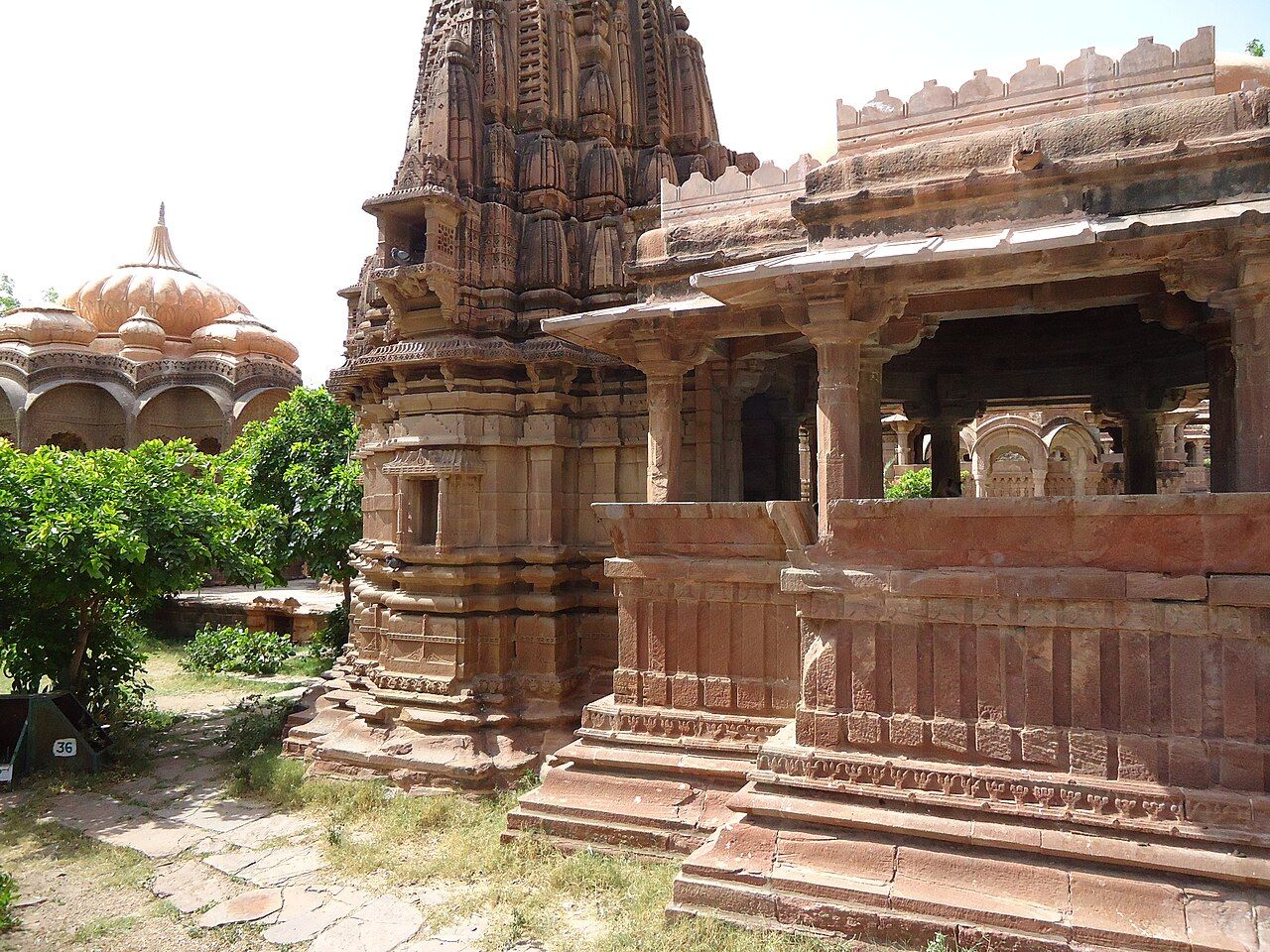
The memorials at Mandore are known locally as devals, and they are what most visitors come to see. Elsewhere in Rajasthan, royal cenotaphs usually take the form of chhatris, open domed pavilions on pillars. At Mandore the larger ones are built instead like Hindu temples, with tall curving spires, carved walls and pillared halls, all in the deep red sandstone of the Jodhpur region.
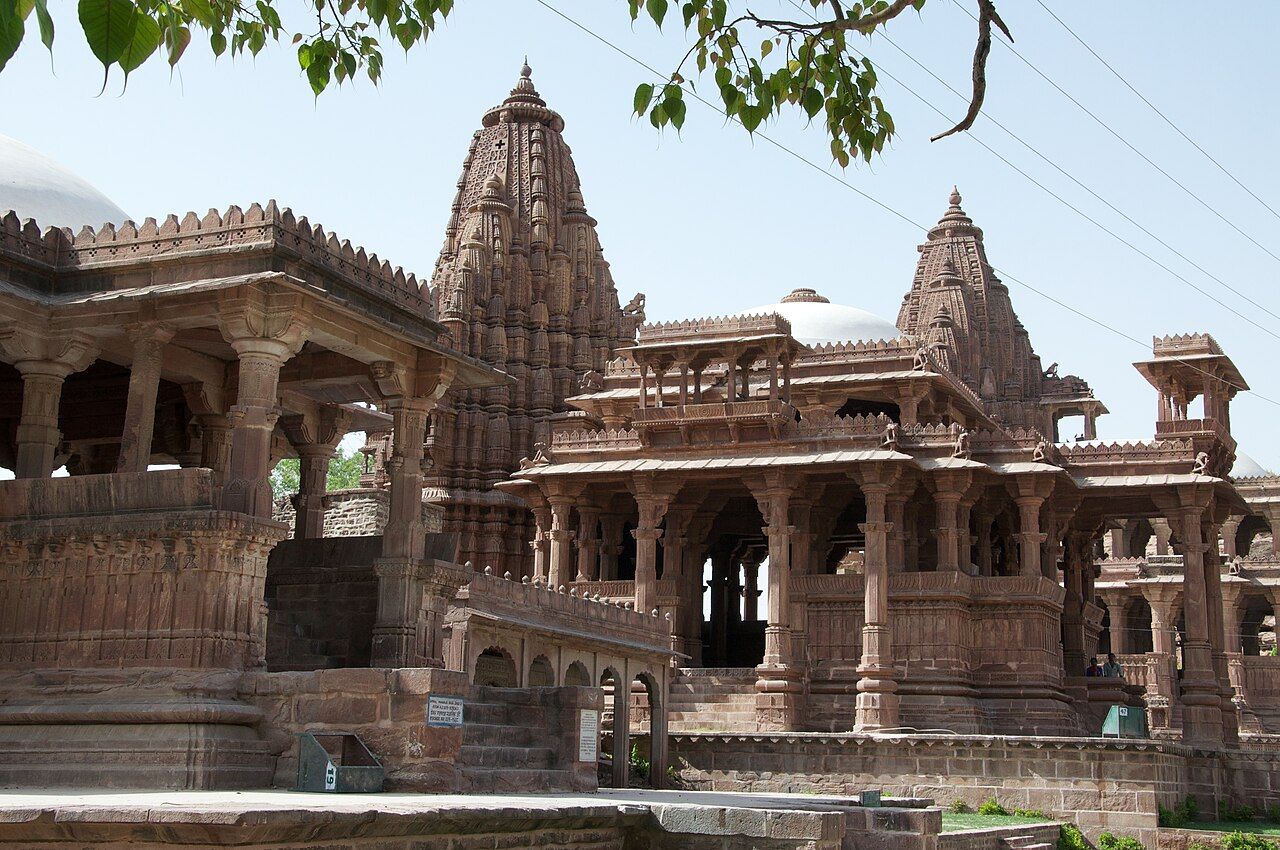
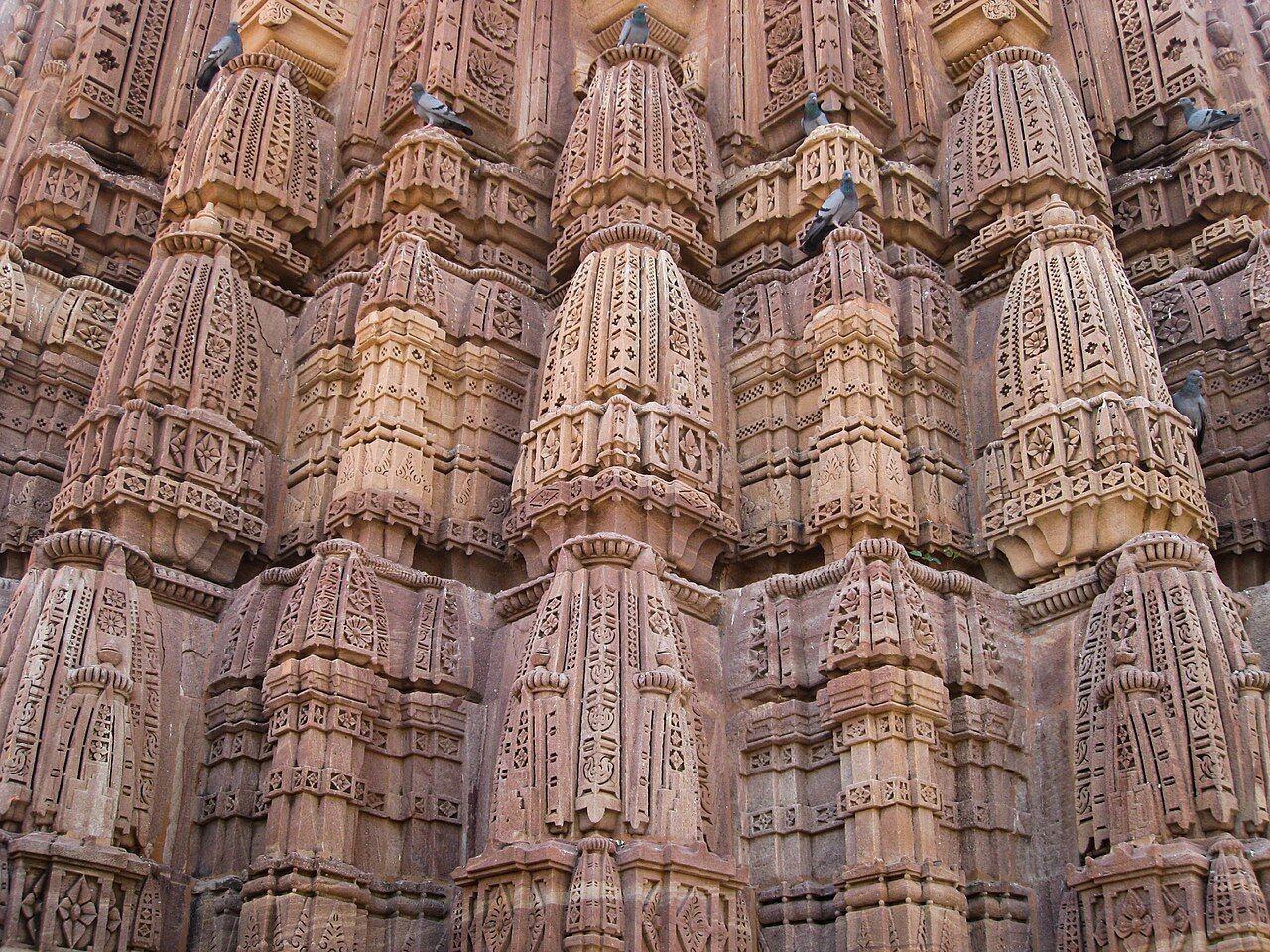
The effect is unusual. You walk along shaded paths and find what look like small temples standing in a row, each with its spire, its steps and its carved band of figures and flowers. Some sit on high plinths; some have open halls you can step into. The largest is usually said to be the memorial to Maharaja Ajit Singh, who ruled in the early eighteenth century. Walk round it slowly and look at the stonework, which is crisp and deep where it has been sheltered and softened by weather where it has not.
These are memorials, not tombs. Hindu rulers were cremated, and the cenotaph marks the place or honours the person. Treat them as you would a temple: no climbing, quiet voices, and shoes off where you are asked.
The Hall of Heroes
Near the cenotaphs, a long gallery known as the Hall of Heroes holds a row of large figures carved from the rock and brightly painted. They show folk heroes of Rajasthan and Hindu deities, standing side by side, some on horseback, all in strong primary colours. It is very different in spirit from the sober red stone of the devals: popular, direct and a little theatrical.
A neighbouring hall holds images of many gods, often called the shrine of the thirty-three crore gods, a figure meant to suggest the whole crowded pantheon of Hindu belief. Both halls are good places to linger and match faces to names. Do not worry if you cannot identify every figure; many local visitors cannot either, and the pleasure lies in the colour and the crowd.
 Worth the detour · OsianOsian's desert temples
The museum and the gardens
A small museum in the garden grounds holds sculpture, carved stone and objects from Mandore and the surrounding region. It is modest and its labels are brief, but it is worth half an hour, especially for the carvings rescued from older temples.
The gardens themselves are a mix of lawns, trees, terraces and paths, with water channels and pools that fill or dry depending on the season. In the cool months they are pleasant to wander, and in the late afternoon the low sun turns the sandstone almost purple. They are also a favourite outing for Jodhpur families, so expect picnics, children and music at weekends.
The langurs
Mandore is home to a large troop of langur monkeys, grey with black faces and long tails, who treat the gardens as their own. They lounge on the cenotaph steps, leap between the trees and watch visitors closely. Some people feed them, which makes them bold. Keep food out of sight, hold on to loose items such as glasses and bags, and do not crouch down to their level or try to touch them. If one comes too close, move away calmly.
From a respectful distance, though, they are part of the charm of the place, and watching a family of langurs groom one another on the stone of a royal memorial is a memorable thing.
Fitting Mandore into a Jodhpur stay
Mandore is close enough to see in a few hours, and it works well in the late afternoon after a morning at the fort. An auto-rickshaw or a car with a driver will get you there in about half an hour, depending on traffic. If you are heading north out of Jodhpur, you can stop here on the way to the old temples of Osian and make a full day of it.
The comfortable months run from about October to March. From April to June the heat is hard, and the garden is best visited only in the last hours of daylight. For travellers coming from Bikaner, Mandore makes a gentle end to a road day that might begin at Junagarh Fort, and for those coming from the east it is a good contrast to the lake and ghats of Pushkar: red stone and royal memory instead of white steps and pilgrims.