
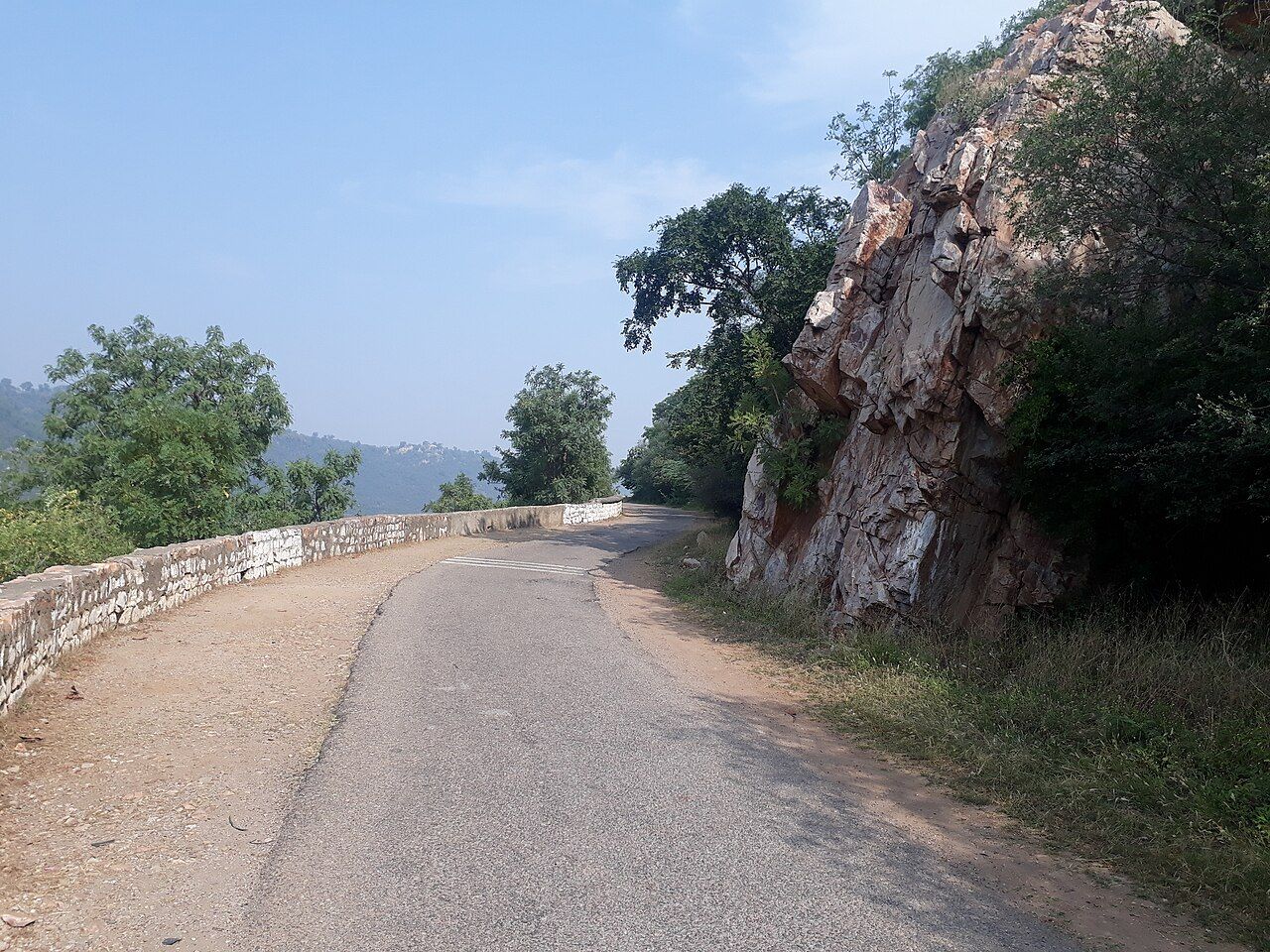
Road notePlan on about 50 to 60 km/h average off the expressways. Start early, stop every two hours, and arrive before dark. Carry water and small change for fees.
Rajasthan is India's largest state by area, more than 340,000 sq km of desert, hills, farmland and scrub. The distances between its sights are long: about 400 km from Jaipur to Udaipur, more than 500 from Jaipur to Jaisalmer, and plenty of slow kilometres in between. Most travellers spend more hours on the road here than they expect, and the road itself becomes part of the journey. Getting it right makes the difference between a trip you remember for its places and one you remember for the tiredness.
The roads today
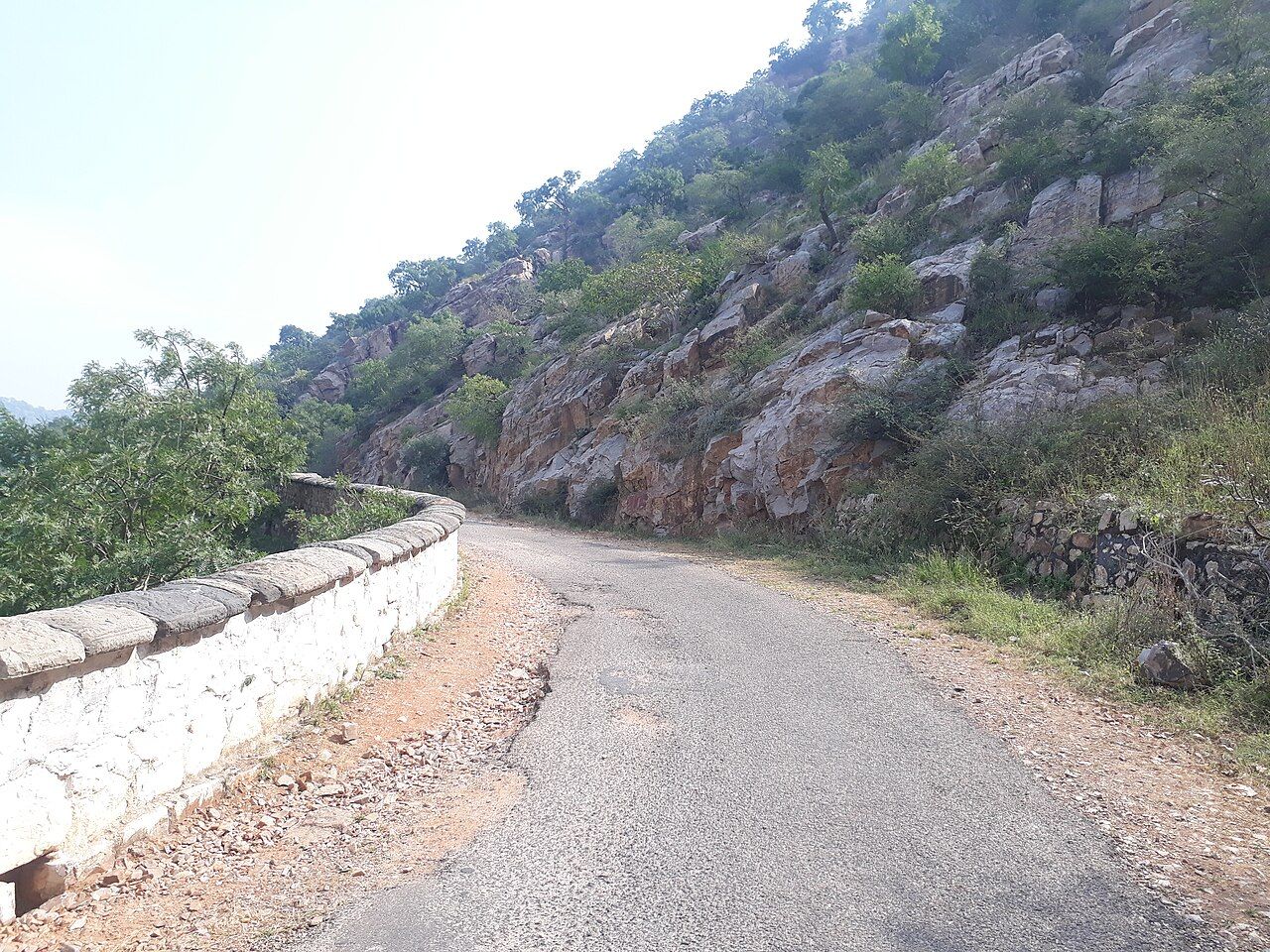
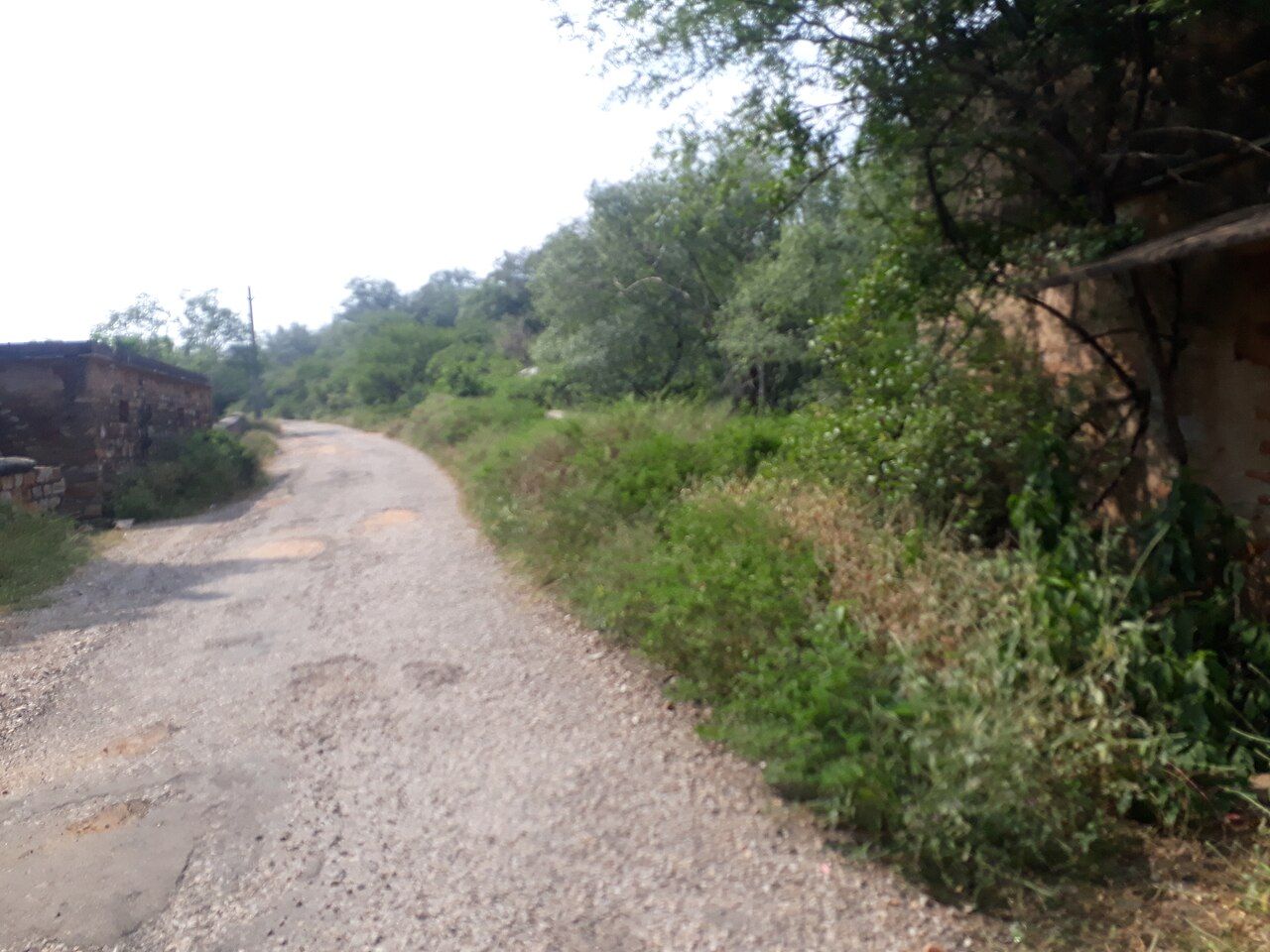
The main highways have improved greatly. Many national highways are now dual carriageways with a divider, a good surface and regular toll plazas, and a new expressway crosses the east of the state. On these roads a car can cover distance at a steady pace. But much of what this site covers lies off them: on state highways, district roads and village lanes, where the road narrows, the surface comes and goes, and every town brings speed breakers, markets and traffic.
Even on the good roads, the traffic is mixed. Trucks carry most of the state's freight and travel in long lines. Tractors pulling trailers move at walking pace. Motorbikes carry whole families. Camel carts still appear in the west, and cattle, goats and dogs wander onto the road everywhere, often lying in the middle of it in the evening warmth. Drivers overtake on both sides and use the horn freely, not in anger but as a signal.
If you are tempted to drive yourself, think hard about it. Traffic follows its own customs rather than the written rules, signs are sometimes only in Hindi, and a long day of steady concentration is tiring even for those who grew up on these roads. Most visitors find that the hours saved by not navigating, parking and negotiating every junction are worth far more than the freedom of their own wheel.
How long things really take
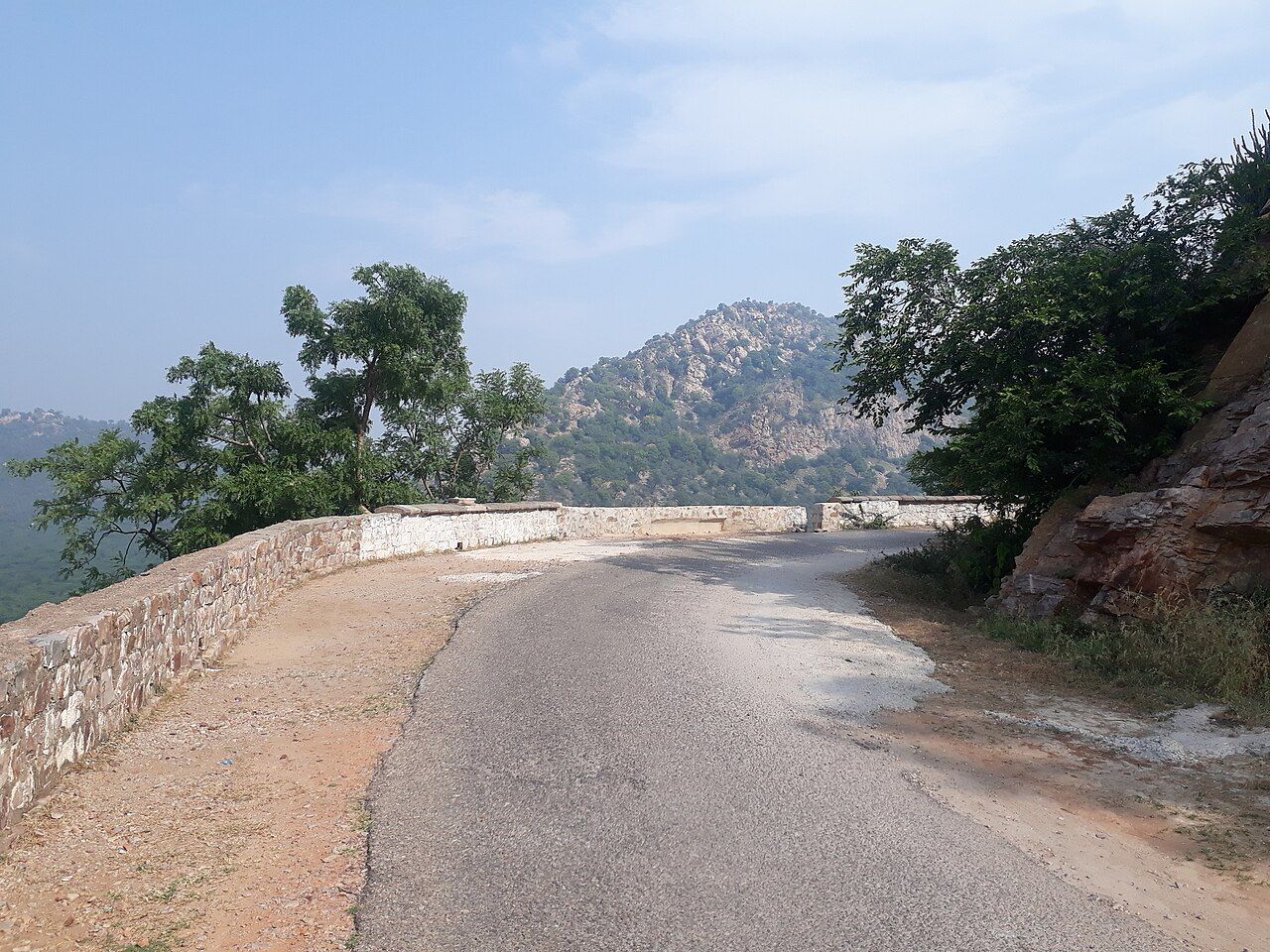
Online maps give optimistic times. A realistic average off the expressways is about 50 to 60 km an hour, including the slowing through towns and the stops you will need. On small rural roads it can be less. A drive of 300 km is a long day; 400 km is about as much as most people should attempt, and it leaves little time for anything else.
A few rules of thumb help:
- Start early. The first hours after dawn are the quietest and the coolest.
- Build in a stop every two hours, for the driver as much as for you.
- Expect delays around towns, festivals, weddings and markets.
- Arrive before dark, always.
A drive of 300 km is a long day; 400 km is about as much as most people should attempt, and it leaves little time for anything else.
Hiring a car with a driver
For most visitors, the usual choice is a car with a driver, hired for the length of the trip. It is not a luxury here but the practical answer to long distances, unfamiliar roads and the strain of driving in heavy mixed traffic. A good driver knows the roads, the rest stops and the parking at each sight, and will wait while you visit.
Agree the terms clearly before you start: the route, the number of days, how long distances are charged, what happens with tolls and parking, and how the driver's food and lodging at night are covered. In many places, hotels provide drivers with a room or a dormitory, but it is worth asking. Remember that your driver is working long days too, and needs proper sleep and meals.
Tolls on national highways are now paid electronically with a FASTag sticker on the windscreen, and hired cars carry one. Parking at forts and temples often carries a small fee, and you will be asked for small sums for shoe minders and entry tickets, so keep cash in small notes.
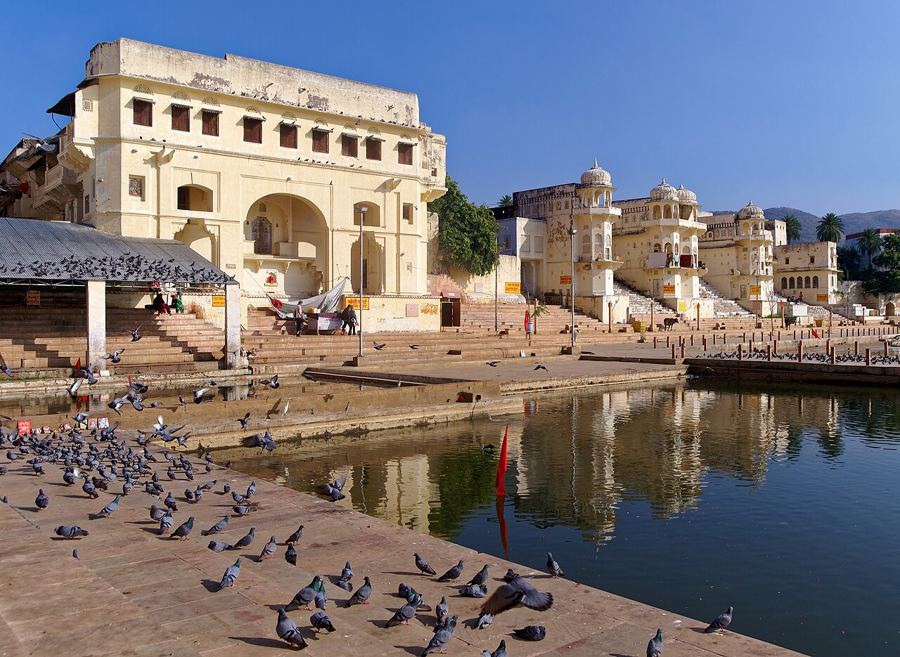 Worth the detour · PushkarPushkar, its lake and its ghats
Buses and trains
State-run buses link almost every town in Rajasthan, from comfortable air-conditioned coaches on the main routes to crowded ordinary buses on village roads. They are cheap, frequent and a good way to see ordinary life, though slower and less comfortable than a car. Private buses also run on the long routes, many of them overnight.
Trains link the main cities well: Jaipur, Ajmer, Jodhpur, Bikaner, Udaipur, Jaisalmer, Sawai Madhopur and Bharatpur all lie on the railway. For long distances, a train is often faster and more relaxing than a road day, and you can combine the two, taking a train between cities and hiring a car locally for day trips. Seats on popular trains sell out, so book through the railway's own system well ahead.
Many of the quieter places on this site, such as the hill fort of Kumbhalgarh or the painted towns like Mandawa, are much easier to reach by car than by public transport. Plan your rail legs between hubs and your road days from them.
Night driving, heat and water
Avoid driving at night. After dark, many trucks, tractors and carts travel with poor lights or none, animals lie on the road, and the risk of a serious accident rises sharply. If a day's drive is running late, stop for the night rather than pushing on.
The heat matters too. From April to June temperatures are fierce, and a long road day can be exhausting even in an air-conditioned car. Carry plenty of water, more than you think you need, and some snacks for stretches between towns. Roadside dhabas, simple eating places along the highways, serve fresh, hot food and tea, and make natural breaks; choose busy ones, where the food moves fast.
Rest days and pace
The most common mistake on a Rajasthan trip is trying to see too much. Every place moved means a morning of packing and a day on the road. Plan for at least two nights in most places, and add rest days when you can: a day without a drive restores you for the next one, and lets you see a town at its own pace. It also gives your driver a day off, which keeps everyone safer on the next stretch.
A sensible route takes the distances into account. The eastern edge, with the bird marsh at Bharatpur, fits with Agra and Jaipur. The south, around the Jain temple at Ranakpur and the lakes of Udaipur, makes its own loop. The desert towns and the north-west reward a slower, longer journey. Join them up with a train or two, give the road the time it needs, and Rajasthan becomes far easier to enjoy.