
Road noteAbout four to five hours by car from Jaipur on decent highways, slower near the towns. Park outside the old lanes and walk; mornings are best, as the lanes heat quickly.
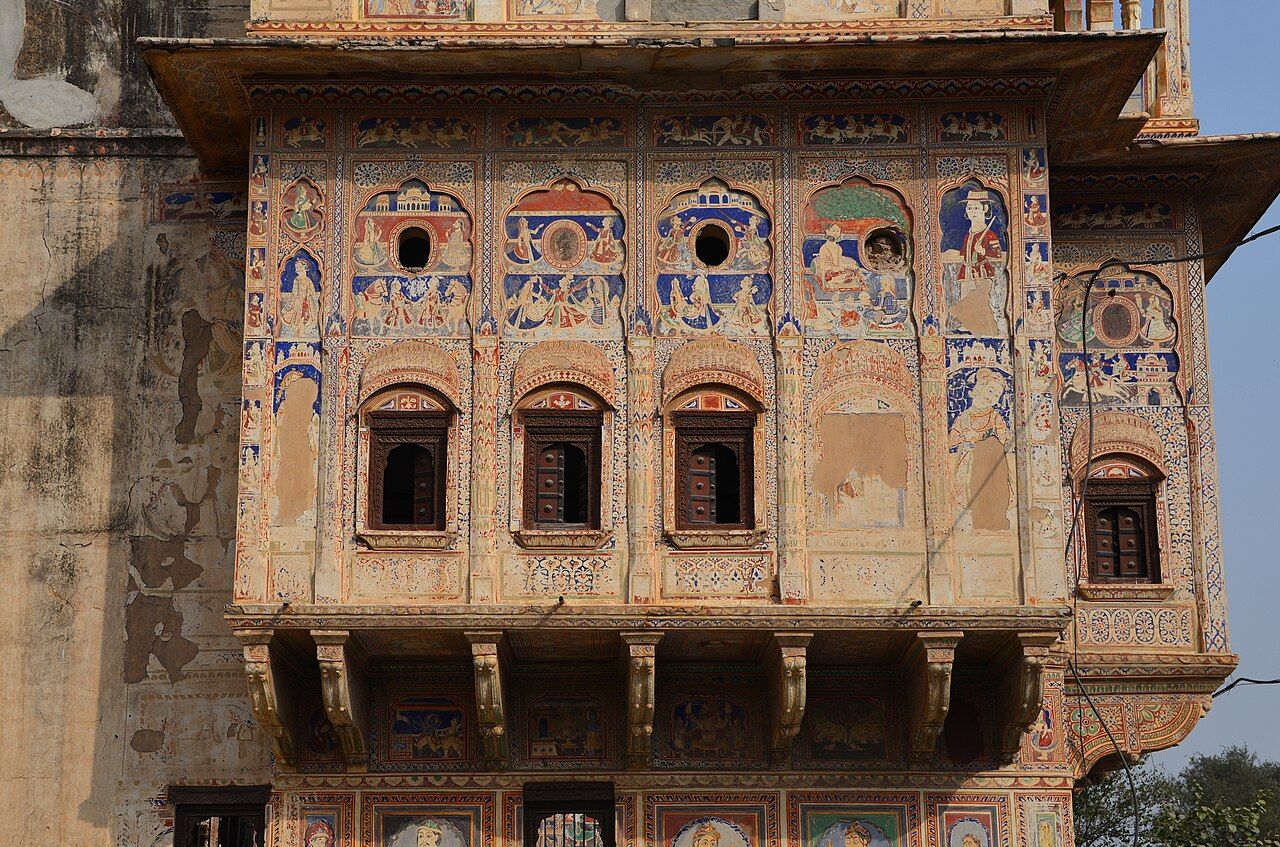
Mandawa is a small town, and you can walk across its old centre in twenty minutes. It takes much longer than that to see it, because nearly every wall wants your attention. Arches are framed with painted flowers, upper storeys are lined with rows of little scenes, and the space above a doorway may hold a whole procession. The town is the most visited of the painted towns of north-east Rajasthan, and once you stand in its lanes it is easy to understand why.
It is still a working town, with tea stalls, cattle, schoolchildren and motorbikes, and most of the painted houses are private. The best way to see it is slowly and on foot, with your eyes raised and your manners in good order.
Where the money came from
Mandawa belongs to Shekhawati, the semi-desert region spread across the Jhunjhunu, Sikar and Churu districts and named after Rao Shekha, the 15th-century Rajput chief whose descendants ruled it. The land is dry and the farming thin, but the region sat on caravan routes, and its Marwari merchant families did well from the trade that passed through. In the 18th and 19th centuries, and into the early 20th, many of them moved their business to Calcutta and Bombay and made fortunes there.
They did not forget home. Families sent money back to build havelis, the large courtyard houses that showed a family's standing, along with temples, wells and memorial pavilions. Then they hired painters to cover them. The result, repeated across dozens of towns, is often called an open-air gallery, and Mandawa holds one of its densest collections.
The town itself was founded in the 18th century, and the old fort still rises over the centre. You see it best from outside, from the lanes below, its walls standing above the rooftops of the havelis that grew up around it.
What the painters put on the walls
The earliest frescoes were painted on wet lime plaster, so the pigment bound into the wall as it dried. Later work was often painted on dry plaster, which was faster but has worn less well. Either way, the colours were mostly earth reds, ochres, greens and blues, and the subjects drew on what the painters and their patrons knew best.
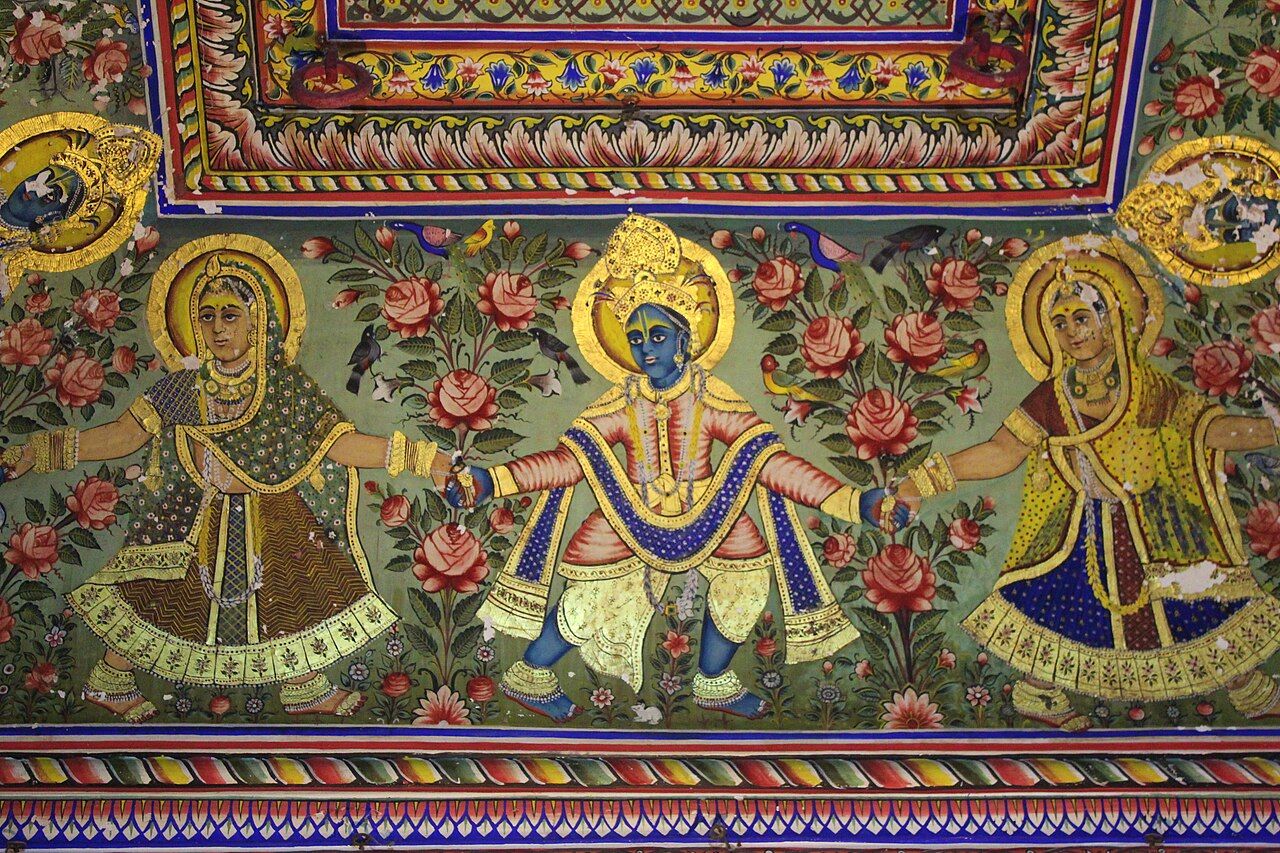
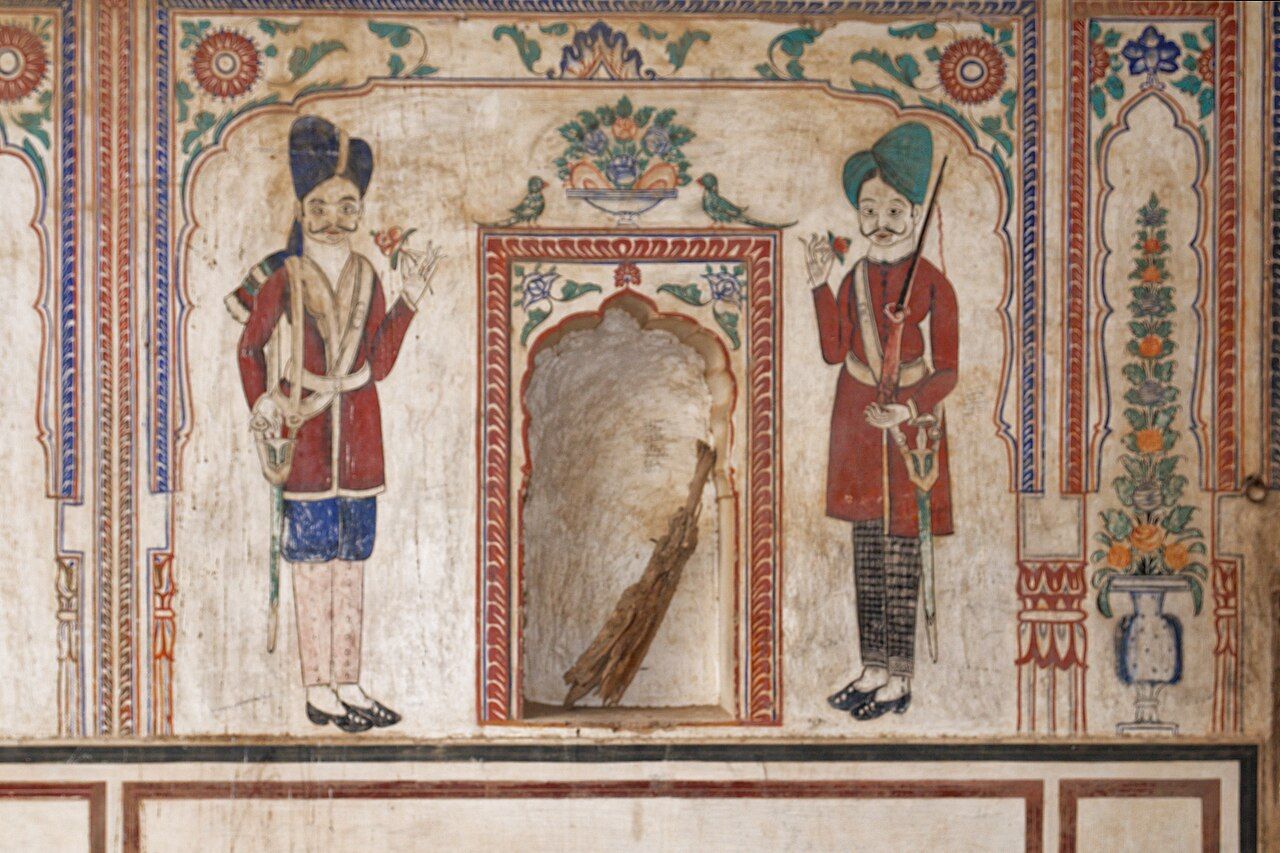
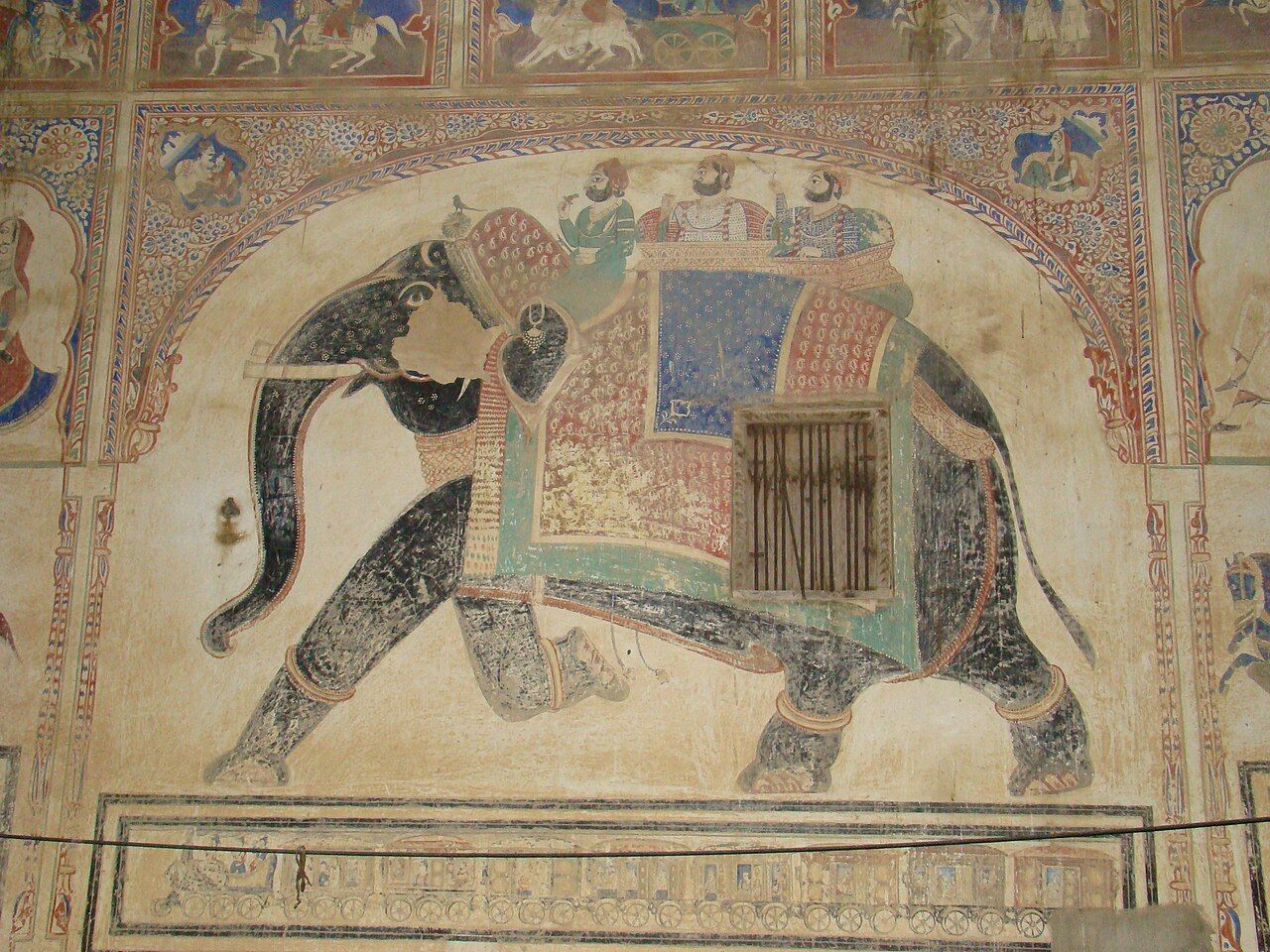
Gods come first. Krishna is everywhere: playing the flute, dancing with the gopis, stealing butter, riding with Radha. Rama, Shiva, Ganesha and the goddesses appear over doors and in courtyards. Then come the scenes of power and display: elephants carrying nobles in howdahs, horsemen, marching soldiers, armed guards standing at either side of an arch.
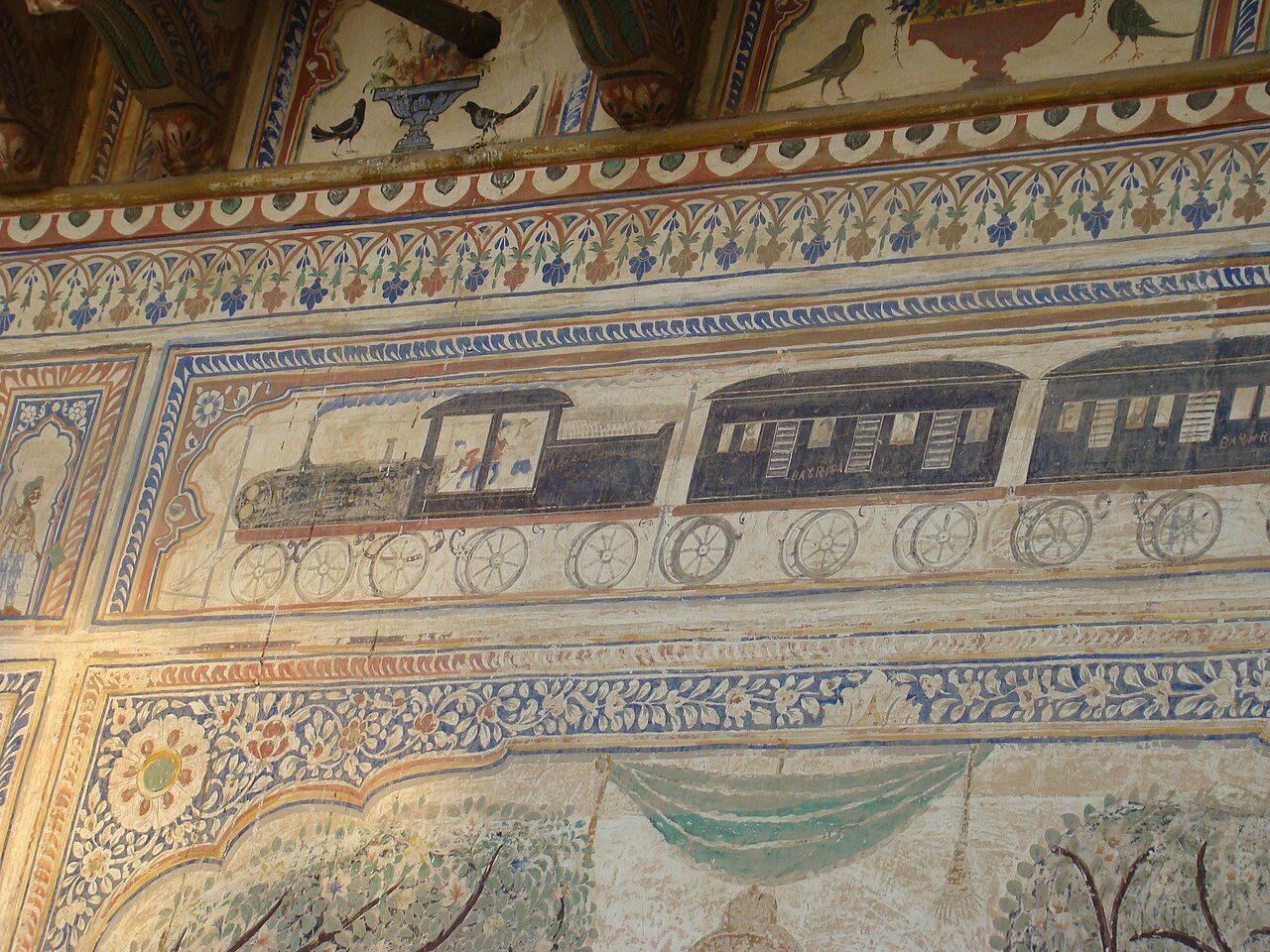
What makes Shekhawati painting stand out is what came next. As the merchants travelled to the port cities, the walls back home began to show the new world they met there. Steam trains rattle along friezes, motor cars appear beside camels, and European men in hats and women in long dresses turn up among the gods. Some of these images were clearly painted by artists working from descriptions, and the results can be wonderfully odd: a locomotive on carriage wheels, a car with no obvious engine.
Look for the small things, too. Parrots and peacocks perch along the borders, flower vases fill the niches, and tiny figures watch from the tops of panels. The painters filled every gap, and some of the most rewarding details sit in corners most visitors walk straight past.
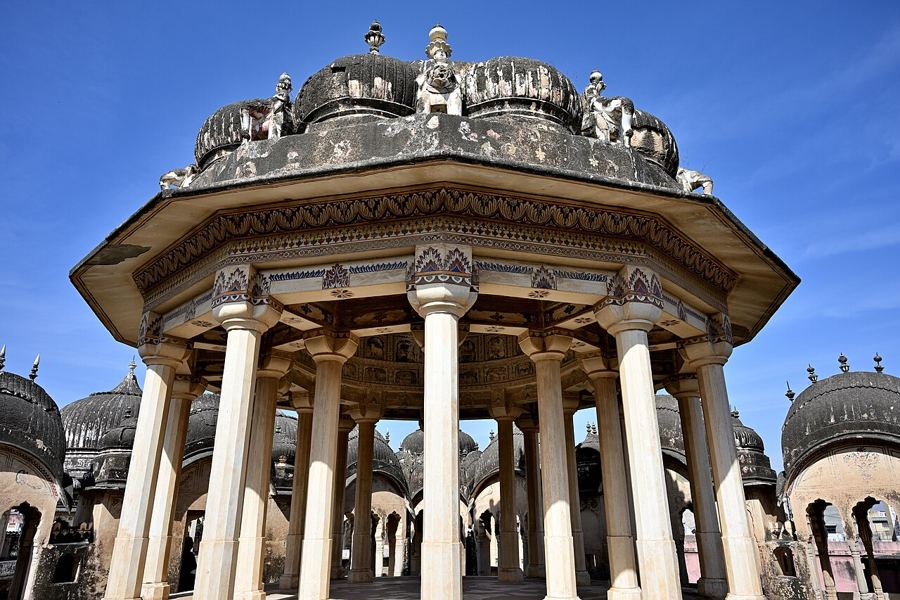 Worth the detour · RamgarhRamgarh's chhatris and quiet lanes
Locked doors and caretakers
Most havelis in Mandawa are private homes, even when no one seems to live in them. Many owners live in the big cities and come back only for weddings or festivals, leaving the house locked or in the care of a watchman. A few are open to visitors, and at others a caretaker may offer to show you the courtyard for a small fee. That is the normal arrangement here, and it helps keep someone looking after the building.
Ask before you step through any gateway, even if the door stands open. Courtyards that look like museums may be someone's kitchen and washing line. If the answer is no, thank them and move on: there is always another wall around the corner. Ask before photographing people, too, and keep a respectful distance from anyone at prayer.
Some houses are in poor shape. Plaster has fallen in sheets, balconies sag, and rain and salt have bleached whole panels. Do not climb on walls or steps that look unsafe, and do not pick at loose paint, however tempting the layer underneath.
Walking the town
There is no set route, and you do not need one. Start early, before ten if you can, when the light is soft and the lanes are still cool. Walk out from the area below the old fort and let the painted walls pull you on. Binoculars are a real help with the upper storeys, where the best-preserved panels often sit under the eaves, out of reach of hands and weather.
A sensible pace is a couple of hours in the morning, a rest through the heat of the day, and another walk in the late afternoon, when the low sun warms the colours. Two mornings are better than one rushed day. The comfortable season runs roughly from October to March. From April to June the heat makes long walks hard, and in the monsoon from July to September rain can turn the unpaved lanes muddy.
Dress modestly, with shoulders and knees covered, and carry a scarf for temples, where shoes come off at the door. Small notes are useful for caretakers, and water is essential.
Beyond Mandawa
Mandawa is a good base for the wider region, because the other painted towns lie within easy reach. Fatehpur, with its step-well and restored haveli, is a short drive west. Nawalgarh and its haveli museums lie about 30 km to the south, and the chhatris of Ramgarh are further north. Each town has its own character, and seeing two or three of them side by side shows how varied the painting is.
Jaipur is about 190 km away, which makes Mandawa a long day trip but a much better overnight stop. If you are planning the drive, our notes on getting around Rajasthan by road cover car and driver hire, realistic driving times and why rest days matter. Give the town time, and the walls repay it.
Give the town time, and the walls repay it.
Next in Shekhawati: Nawalgarh's havelis and fresco museums