
Road noteThe lakeside lanes are too narrow for cars: park outside the old city or come by auto-rickshaw, then walk. Ghat steps are slippery when wet.
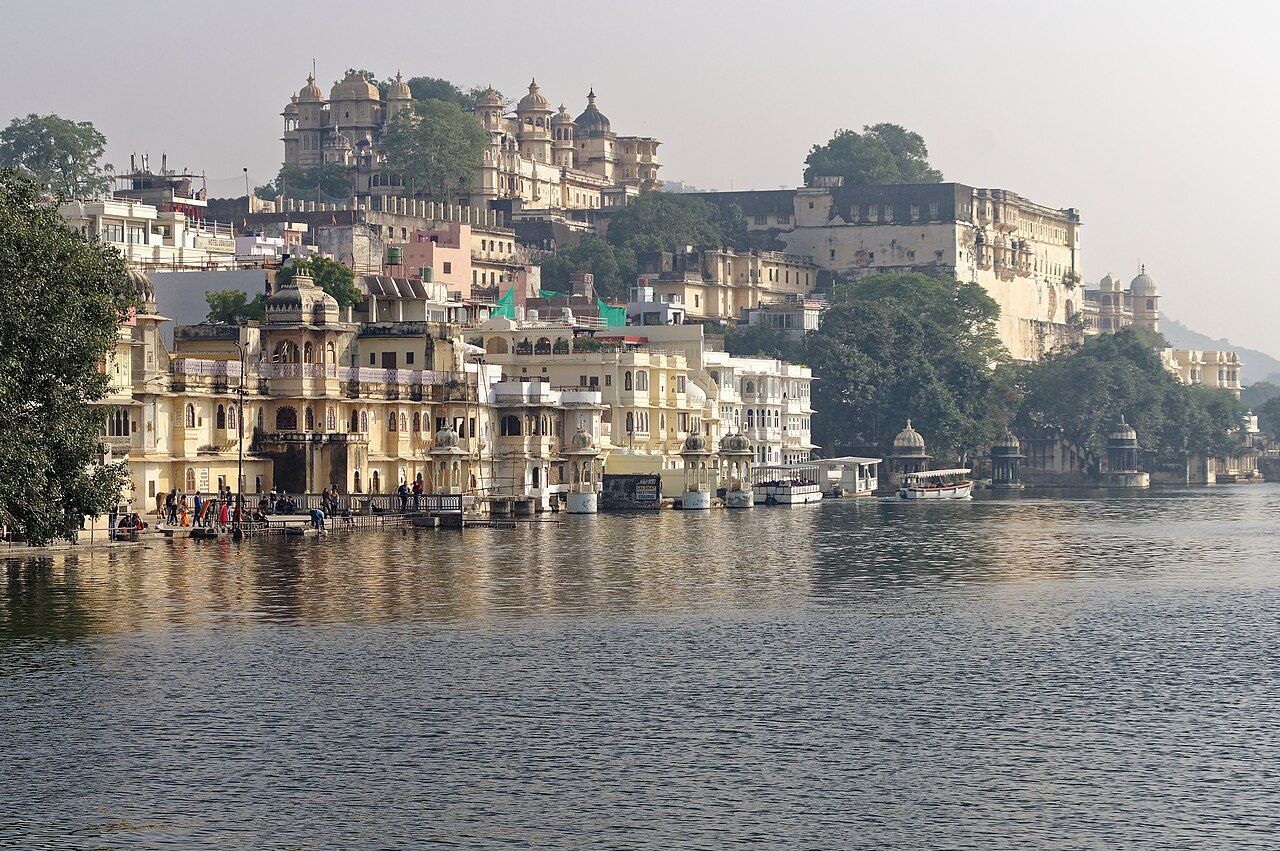
Udaipur faces its lake the way other towns face a main square. Houses, temples and palaces crowd down to the water, steps run from their doorsteps into it, and in the evening half the city seems to come out and sit on the ghats. Lake Pichola is not natural. It began as a dam across a stream in the fourteenth century, and when Maharana Udai Singh II founded his new capital here in 1559 he enlarged it. Everything that makes old Udaipur what it is grew up around that work of water engineering.
An old lake made by hand
The lake takes its name, as it is usually told, from the village of Picholi on its shore. It was made by damming, then widened and raised by later rulers, and it is linked by channels to other lakes in the valley, including Fateh Sagar to the north. The whole system was built to hold monsoon rain through the long dry months, and it still does that job.
That means the lake changes. After a good monsoon it is brim-full, lapping at the lowest steps of the ghats and lifting the boats level with the jetties. After a weak one the water drops, sometimes a long way, and you see green weed, exposed steps and wide margins of mud.
Gangaur Ghat and Bagore ki Haveli
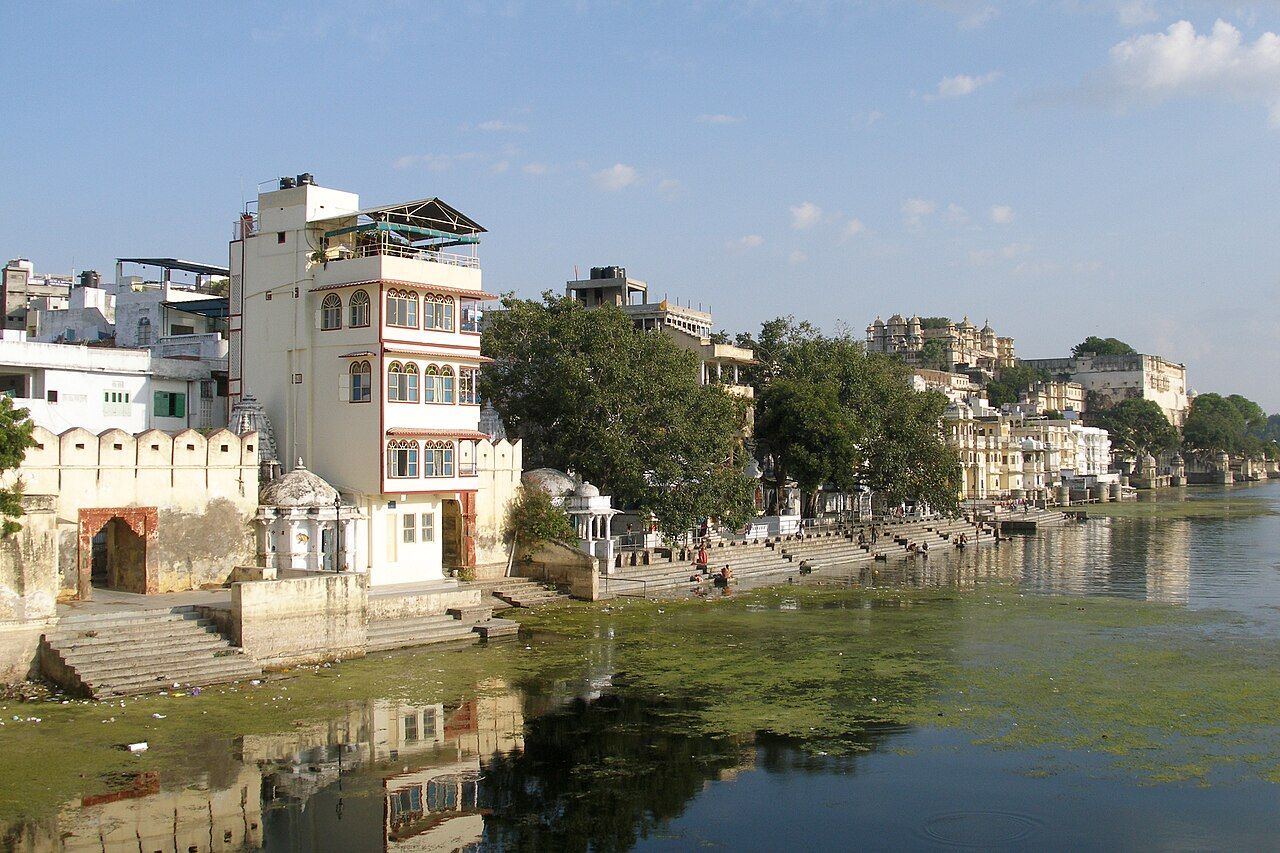
The best place to start is Gangaur Ghat, the broad stepped landing on the east shore below the old city. It is named for Gangaur, the spring festival in honour of the goddess Gauri, when women in their brightest clothes carry painted images of the goddess down to the water. Outside festival time it is a place for sitting: families on the steps, pigeons, people washing clothes at the edges in the early morning, and the triple arch of the ghat's gateway framing the lake.
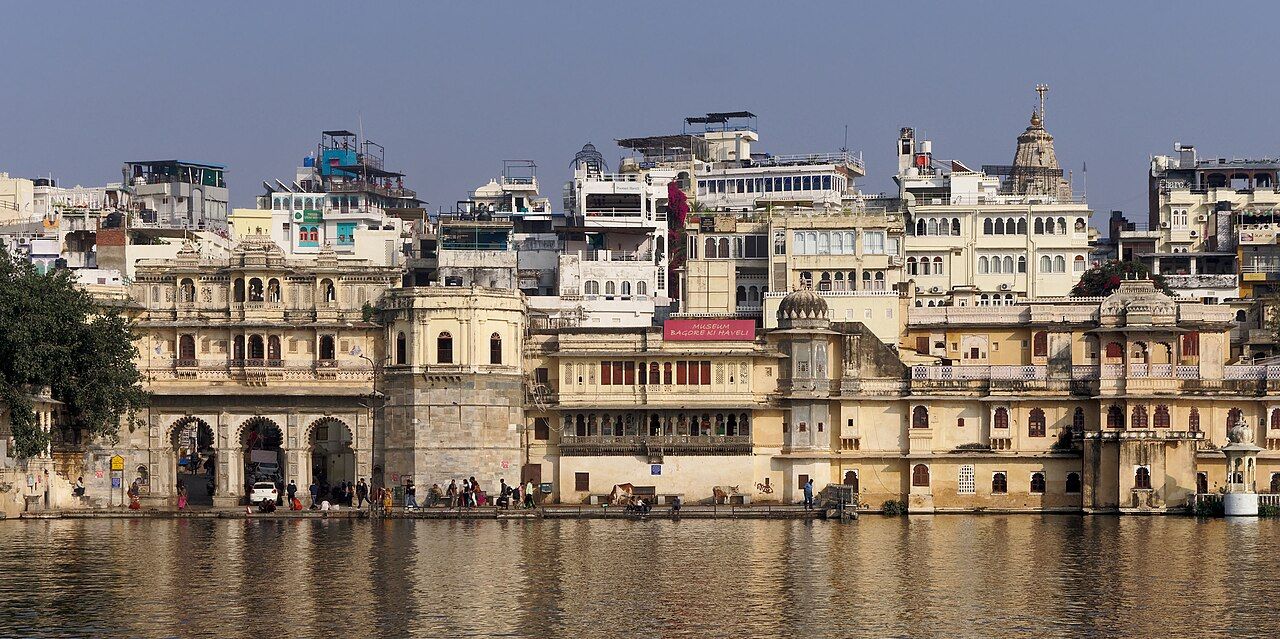
Right beside the ghat stands Bagore ki Haveli, an eighteenth-century mansion built for a minister of the Mewar court and now a museum. Its rooms run round courtyards and up narrow stairs to balconies over the water, and the collection gives a sense of how a great household lived: costumes, painted rooms, puppets, games. In the evenings the haveli has held a programme of folk dance and music in one of its courtyards; times and arrangements change, so ask at the door earlier in the day.
Across a small footbridge from the ghat the lanes continue along the shore, and here you can drift. Some of the old lakeside houses have been rebuilt beyond recognition; others still have their carved balconies and worn steps. Small temples sit at the water's edge with a bell and a lamp. Keep your shoes on unless you step into a shrine, and dress so that shoulders and knees are covered.
The palaces on the water
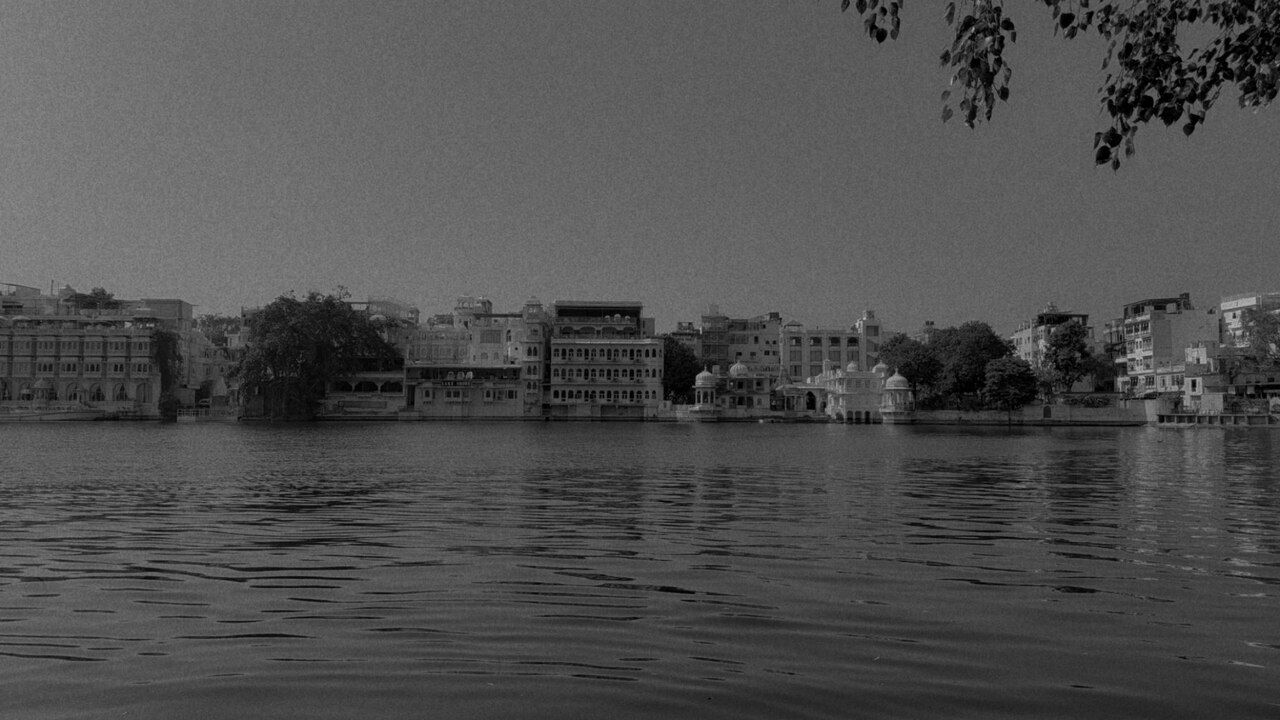
From almost anywhere on the east shore you see the island palaces. Jag Mandir sits further out, a low cluster of pavilions and domes begun in the seventeenth century; it is said to have sheltered the young prince Khurram, later the emperor Shah Jahan, during a rift with his father. Closer to the city shore floats the white palace on the water, its walls rising straight out of the lake so that on a still day it looks as though it is resting on its own reflection.
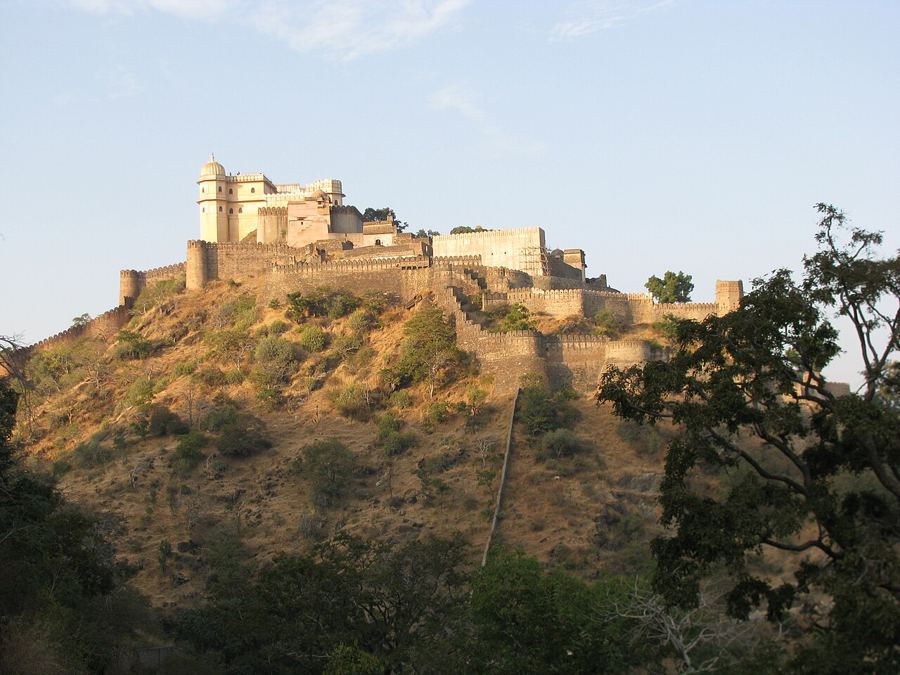 Worth the detour · KumbhalgarhKumbhalgarh and its long wall
You see both best from the shore in the hour before sunset, when the white walls turn pink and then grey, and the hills behind the lake go dark. Find a place on the steps, or at the far end of one of the small public terraces, and wait. The pleasure is not in any single moment but in watching the colours change across the water.
The pleasure is not in any single moment but in watching the colours change across the water.
Boats at dusk
Boat trips leave from the palace side of the lake, below the City Palace, and run through the day, with the late-afternoon departures the most popular. A trip gives you the city as it was meant to be seen, from the water: the long wall of the palace above you, the ghats and temples strung along the shore, the hills closing round the far end of the lake. Some trips pause at Jag Mandir so you can walk its terraces.
Trips depend on the water. When the lake is low some routes are cut short and some jetties cannot be used, and on festival days the boats may be crowded or suspended. Fares, times and routes change; there is no need to arrange anything in advance outside the busiest holiday weeks.
If you would rather see the lake from above, the drive or the climb to the Monsoon Palace on its hill west of the city gives you Pichola and Fateh Sagar laid out together, silver in the evening light.
The lanes behind the ghats
Lake Pichola is not only its shoreline. Behind the ghats the old city climbs in a tangle of lanes towards the Jagdish temple and the palace gates, and this is where you should spend the morning before the lake claims your evening. Walk early, before the motorbikes and the heat. Doorways are painted with elephants and horsemen, small shrines appear at corners, and every few minutes a gap between houses shows you a slice of water. Mornings are also when the ghats belong to the people who live here: bathing, washing, a quick prayer at the water's edge. Watch from a respectful distance and keep the camera down.
The lanes are steep in places and uneven everywhere. Wear proper footwear, carry water, and do not try to drive into them: even small cars get stuck, and there is nowhere to park. If you are arriving by road, leave the car at the edge of the old city and walk in. There is more on driving and parking in Rajasthan's old towns in our guide to getting around by car and driver.
The comfortable time to come is October to March, when the days are warm and the evenings cool enough for a shawl on the ghats. In April and May the heat is heavy and the water may already be low. In the monsoon, from July to September, the lake fills and the hills turn green, and Udaipur feels newly washed, though you will need to plan around the rain.
Next in Mewar: Sajjangarh, the Monsoon Palace on the hill